
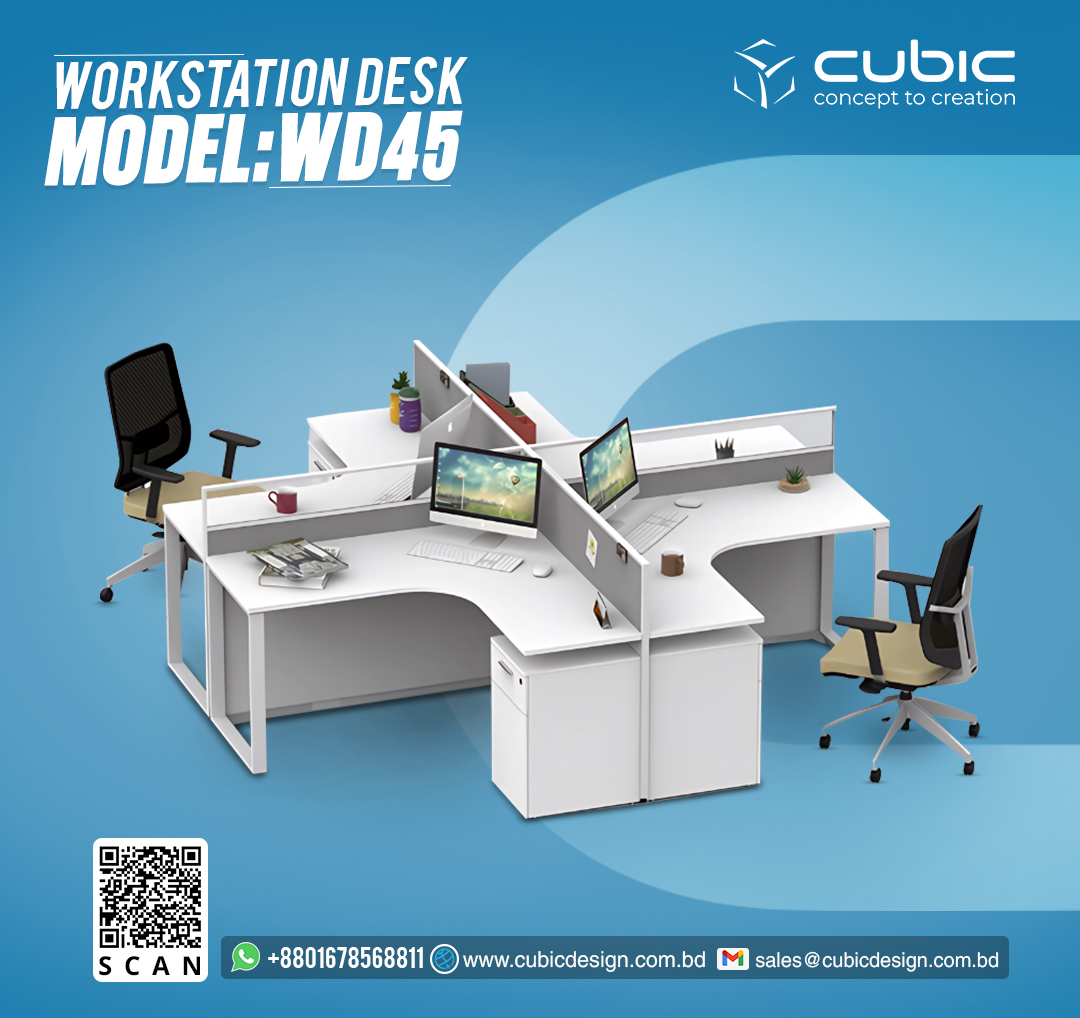
In moderns fast paced world, the workstation has evolved far beyond chairs and simple desks. Workplace are no longer only spaces to work, they’re surroundings that inspire creativity, productivity, and collaboration. Whether you work from home or in a corporate setting, the perfect furniture plays an important role in shaping comfort and efficiency. Workstation interior design mainly focuses on building a balanced, functional environment that significantly prioritizes productivity and employee health. Most importantly effective designs integrate ergonomic furniture, strategic placement for flow, and durable materials to withstand constant use.
Strategic Design Principles:
70/30 Rule: Dedicate 70% of the room to a primary element (like a dominant furniture style) and 30% to accent elements to create visual interest.
3-5-7 Rule: Group decorative furnishings or smaller items in odd numbers to ensure the space feels balanced and intentional.
Space Management: In smaller offices, use multi-functional furniture and vertical storage to make every square foot count.
Placement: Furniture should be arranged to ensure a natural flow and comfort for employees, often prioritizing natural light for a more spacious feel.
Essential Workstation Furniture :
Modern workstations often utilize a mix of these core pieces to maximize space and efficiency:
Office Desks: Options include executive desks, height adjustable standing desks, L-shaped or U-shaped desks, and cluster workstations for multiple people.
Ergonomic Chairs: Critical for comfort, these include mesh chairs, operator chairs, and executive chairs that provide lumbar support and encourage proper posture.
Storage Solutions: Integrated pedestals, filing cabinets, and office cupboards help keep the workspace organized and clutter free.
Dividers and Screens: These provide acoustic planning and privacy in open-plan offices.
Strategic office interior design is more than an aesthetic choice; it is a very vital business tool that may increase employee productivity by up to 20%. By optimizing physical comfort, environmental conditions along with spatial flow, companies can significantly develop focus, creativity, and also overall job satisfaction.


