
What is the average cost of interior design in Dhaka?
The average cost depends on the project’s size as well as scope. Small projects, like a single room, may start at ৳50,000, while designing an entire home or office can range from ৳500,000 to ৳2,000,000 or higher.
Regional Variations (e.g., Dhaka, Bangladesh):
- Small Projects:৳50,000+.
- Full Office:৳500,000 to ৳2,000,000+.
- Rate per sq ft:৳10 to ৳
It is very essential to get a detailed, itemized proposal to avoid hidden costs and account for fluctuations in material prices and labor.
When comparing furniture materials, it helps to look at durability, cost, maintenance, appearance, and best use cases. Here’s a clear side-by-side guide:
🪵 1. Solid Wood
Examples: Oak, maple, walnut, teak
Pros
- Very durable and long-lasting
- Can be refinished multiple times
- Natural, premium look
- Strong structural integrity
Cons
- Expensive
- Can warp with humidity changes
- Heavy
Best for: Dining tables, bed frames, high-quality cabinets
Lifespan: 20–100+ years
Cost: $$$–$$$$
🪚 2. Engineered Wood
a) Plywood:
Pros
- Strong and stable
- Resists warping better than solid wood
- More affordable
Cons
- Edges need finishing
- Not as luxurious-looking
Best for: Cabinets, shelves
Cost: $$–$$$
b) MDF (Medium-Density Fiberboard)
Pros
- Smooth surface (great for paint)
- Affordable
- Doesn’t crack
Cons
- Heavy
- Swells if exposed to moisture
- Not very strong for heavy loads
Best for: Painted furniture, decorative pieces
Cost: $
c) Particle Board
Pros
- Very inexpensive
- Lightweight
Cons
- Low durability
- Weak screw holding
- Easily damaged by water
Best for: Budget furniture
Cost: $
🛋 3. Metal (Steel, Aluminum, Iron)
Pros
- Very strong
- Modern/industrial look
- Resistant to pests
- Long lifespan
Cons
- Can rust (if untreated)
- Cold appearance
- May dent
Best for: Outdoor furniture, frames, office desks
Lifespan: 15–50 years
Cost: $$–$$$
🛋 4. Upholstered (Fabric, Leather, Faux Leather)
Fabric
- Comfortable
- Many design options
- Can stain easily
Leather
- Luxurious
- Durable
- Expensive
- Requires conditioning
Faux Leather
- Affordable
- Easier maintenance
- Less durable than real leather
Best for: Sofas, chairs, headboards
Cost: $$–$$$$
🪟 5. Glass
Pros
- Modern, sleek look
- Easy to clean
- Makes space feel larger
Cons
- Breakable
- Shows fingerprints
- Heavy
Best for: Coffee tables, desks
Cost: $$–$$$
🌿 6. Plastic / Resin
Pros
- Lightweight
- Water-resistant
- Very affordable
Cons
- Less durable
- Can look cheap
- May fade in sunlight
Best for: Outdoor, kids’ furniture
Cost: $
Standard Office Cubicle Sizes – Complete Dimension Guide:
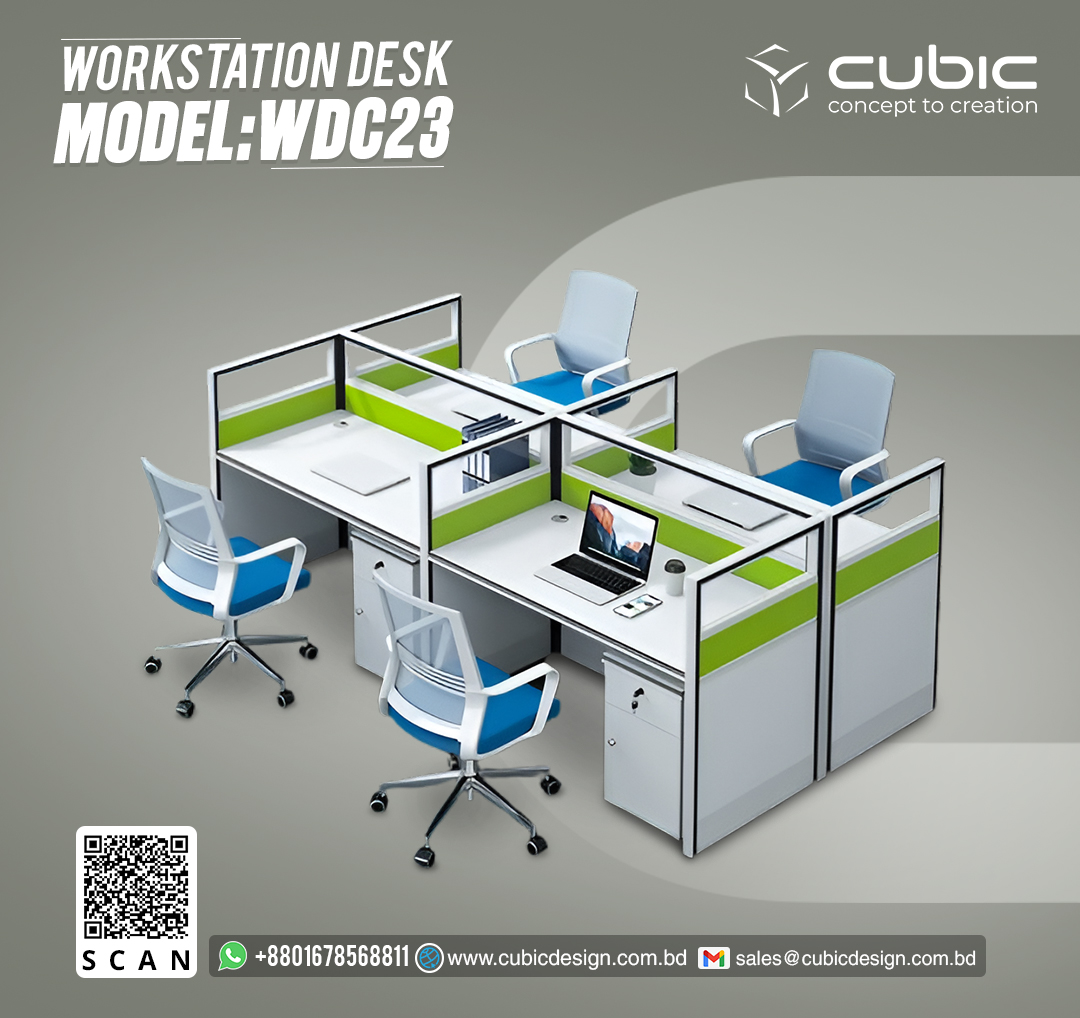
A very well-designed workstation concentrates on ergonomics, comfort and also most prominently, adequate space for both work and movement. Standard workstation dimensions usually feature a height of 28–30 inches, a depth of 24–30 inches, and widths ranging from 48–72 inches. A typical desk depth of 24 inches works for most basic setups; while 30 inches provides you room for larger monitors or creative projects. For those who prefer measurements in cm, standard desk heights range from 71-76 cm, widths from 122-183 cm, and depths from 61-76 cm.
This guide provides standard interior design dimensions for workstations to ensure comfort, productivity, and efficient use of space, based on 2025–2026 industry standards.
- Standard Desk Dimensions (For Individual Use) :
- Height: The industry standard height is 29 to 30 inches (74–76 cm). For ergonomic comfort, desks should range from 71 to 76 cm.
- Width (Length):
- Minimum: 75 cm (30 inches) to 100 cm (40 inches) for compact or minimalist setups.
- Standard: 120 cm (48 inches) is considered ideal for a single monitor/laptop setup.
- Large/Executive: 152 cm (60 inches) to 183 cm (72 inches).
- Depth (Width):
- Standard: 60 cm to 76 cm (24–30 inches).
- Minimum: 51 cm (20 inches) is possible but less comfortable.
- Dual Monitor Setup: At least 76 cm (30 inches) deep is recommended.
- Workstation Clearance and Movement :
- Chair Space (Static):18 to 30 inches (46–76 cm) behind the desk for the chair.
- Chair Space (Dynamic/Movement):36 to 42 inches (91–107 cm) to allow movement around the chair.
- Passageways: A minimum of 80 cm (31.5 inches) for one person, and 150 cm (59 inches) for two people to pass.
- Visitor Space: If seating guests, allow 48 to 60 inches (122–152 cm) behind the chair.
- Cubicle and Open-Plan Workstation Sizes :
- Small/Focus: 4’ x 2’ (122×61 cm) or 5’ x 3’ (152×91 cm).
- Standard: 6’ x 6’ (183×183 cm).
- Managerial: 6’ x 8’ (183×244 cm) or 8’ x 8’ (244×244 cm).
- Panel Height:
- Low: 30”–42” (76–107 cm) – seated privacy.
- Medium: 43”–56” (109–142 cm) – standing visibility.
- High: 57”–70” (145–178 cm) – full visual privacy.
- Space Per Person (Office Planning) :
- Average Office: 150–175 sq ft per employee (including shared spaces).
- High-Density/Startups: 80–150 sq ft per employee.
- Individual/Private Office: Minimum of 10 m² (approx. 107 sq ft).
- Ergonomic and Functional Adjustments :
- Standing Desks: Should offer a height range of 60 cm to 125 cm (23.6–49 inches) to accommodate different user heights.
- Monitor Distance:20 to 26 inches (50–66 cm) from the user.
- Keyboard Position: Elbows should be at a 90-degree angle when typing.
- Storage: File cabinets need enough room to open, typically requiring 36 inches (91 cm) of clearance.
The Importance of Selecting the Perfect Furniture Material:
Selecting the right furniture material is crucial for ensuring longevity, comfort, and also functionality, ultimately dictating how a piece withstands daily wear and tear. Durable, high-quality materials such as solid wood, top-grain leather, or performance fabrics provide better long-term value, while inappropriate choices can lead to frequent, costly replacements.
The Key reasons for carefully selecting furniture materials include:
- Durability and Longevity: Solid wood frames (oak, cherry) are, for example, stronger and last longer than cheaper alternatives. High-quality, tightly woven fabrics or leather are essential for furniture in high-traffic areas, ensuring they remain in good condition despite daily use.
- Maintenance and Hygiene: Materials dictate maintenance needs. Synthetic fabrics plus microfiber are easy to clean, making them ideal for homes with children or pets. Leather is durable and easy to maintain, while delicate materials require specialized care.
- Comfort and Health: The choice of padding and upholstery affects both comfort and health; high-density foam provides better support and longevity than low-density options.
- Style and Aesthetics: The material dictates the aesthetic, such as metal for an industrial feel or warm, stained wood for a classic look.
- Environmental and Safety Factors: Some furniture utilizes sustainable or organic materials, providing healthier, eco-friendly options for the home.
Key Considerations for Material Selection:
- Environment: Ensure materials are suitable for the room’s, such as moisture-resistant materials for kitchens or bathrooms.
- Lifestyle: For busy, daily-used areas, choose stain-resistant and durable materials.
- Usage: Consider if the piece is for high-traffic, daily use or a less-frequented, formal space.
Conclusion:
For an incredibly gorgeous furniture store like Cubic Interior design, offers a diverse range of materials, from solid wood to synthetic options & leather, allows the store to cater to various design preferences plus ensure that customers find the perfect piece to complement their stunning spaces.


:%20Small%20Projects:৳50,000+.%20Full%20%5B…%5D&media=https://cubicdesign.com.bd/wp-content/uploads/2026/02/4-person-Office-Workstation-Desk.jpg)